The launch news release, the opinion piece, and the media target list.
Rare Hair is a concept product created for a graduate course; it is not a real Rare Beauty line. All quotations attributed to Rare Beauty executives below were written by me to demonstrate news release and op-ed craft — they are illustrative, not real statements.
Earned Media
News Release
Rare Beauty Launches 'Rare Hair,' a Low-Vision and Blind Accessible Hair Care Line Designed for All
Rare Beauty, founded by Selena Gomez, today unveiled Rare Hair, a new line of hair care products designed for blind, low-vision, and mobility-challenged users. The launch marks the brand's first expansion outside of cosmetics and reflects its ongoing commitment to building a more inclusive, user-centered beauty industry.
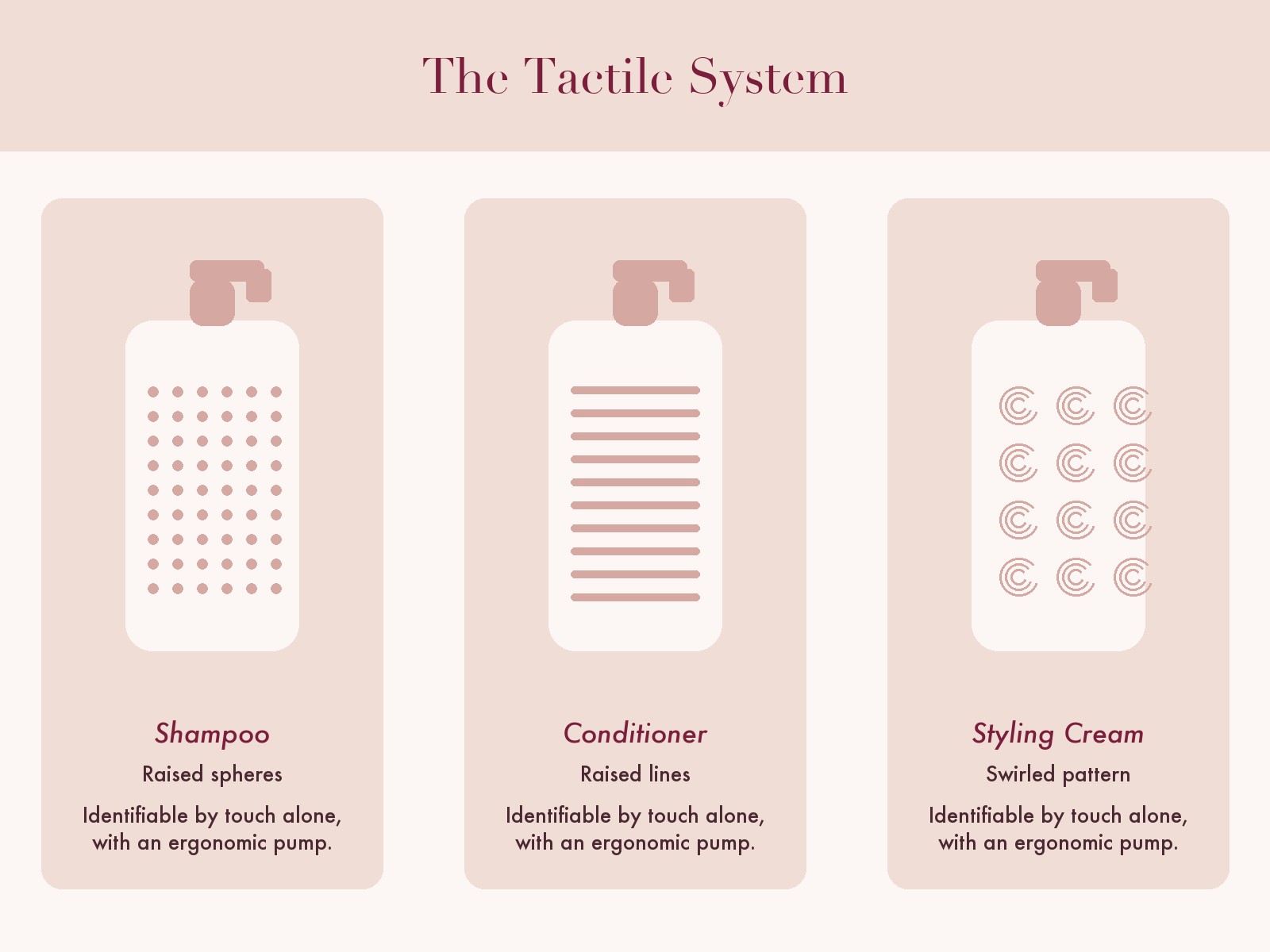
With the release of Rare Hair, Rare Beauty aims to address a long-standing gap in the hair care market: the lack of packaging designed for people who experience barriers to grip, dexterity, or visual identification. The brand developed a tactile packaging system that enables users to distinguish products quickly and confidently through touch alone — raised spheres for shampoo, raised lines for conditioner, and a swirled pattern for styling products.
Each bottle is equipped with an ergonomic pump, designed for effortless dispensing by users with limited hand strength or dexterity. The packaging system was created in consultation with accessibility advocates and product-design specialists, and involved extensive feedback from blind and low-vision individuals to ensure the line meets real, everyday accessibility needs.
"Beauty should be inclusive, and we want to make sure everyone can enjoy hair care products that are not only effective but also easy to use," said Selena Gomez, Rare Beauty founder. "With Rare Hair, we're continuing our commitment to creating products that empower all users to feel confident and included."
Rare Hair's formulas uphold the brand's existing values, featuring vegan, cruelty-free, high-performance ingredients tailored to different hair needs. The collection includes a hydrating shampoo, nourishing conditioner, and flexible styling cream — each created to deliver results while maintaining a sensorial experience that aligns with Rare Beauty's soft, calming aesthetic. The brand emphasised that accessibility should never come at the expense of performance or luxury.
"Rare Hair is about more than just hair products. It's about designing with empathy and understanding the needs of the people who have been underserved by the beauty industry," said Joyce Kim, Rare Beauty chief product officer.
Rare Hair will be available beginning October 2025 at RareBeauty.com, Sephora, and select retail partners nationwide, in recognition of Blindness Awareness Month.
Earned Media
Opinion Piece
The Beauty Industry Has a Blind Spot. Rare Hair Fills It.
When a beauty brand like Rare Beauty proposes a hair care line with packaging deliberately designed for blind, low-vision, and mobility-challenged users, it does more than introduce a new product — it sends a message. It says that beauty, self-care, and everyday routines should not be privileges reserved for only some, and that design choices must reflect the lived experiences of an inclusive population.
The reality is stark: globally, more than 1 billion people — about 15–20% of the population — live with some form of disability. In the United States alone, this demographic, along with their friends and families, wields substantial spending power. Yet mainstream consumer products too often ignore the needs of those who don't interact with the world in the "average" way. For people with vision loss or limited dexterity, simple tasks like distinguishing a shampoo from a conditioner can become frustrating barriers.
Academic research confirms that inclusive packaging isn't just a nicety. In a study on cosmetic packaging and visually impaired persons, participants reported that accessible packaging made a real difference in their ability to select, use, and dispose of products without assistance. Inclusive design can reduce the stigma many visually impaired people face when they're forced to say "I need help" to do something private.
There's also a compelling business case. Inclusive design doesn't just fulfil an ethical obligation or serve a niche market — it opens up a vast and underserved consumer base, building loyalty among consumers who often feel ignored by mainstream products.
Moreover, inclusive design often benefits all users. This is the essence of what scholars call the curb-cut effect: accommodations created for people with disabilities frequently end up helping many others. A tactile-packaged shampoo bottle with an ergonomic pump doesn't only help someone with visual needs; it helps anyone who wants a quick, spill-free routine.
In a world where beauty standards have too often equated "normal" with "able-bodied," Rare Hair would stand as a counter-narrative — signalling that inclusivity isn't about superficial representation but about real, tactile, everyday usability. It would challenge other beauty brands to ask: who are we designing for — only idealised bodies, or all bodies?
Earned Media
Media Targets
Beauty & Lifestyle
- Allure, Teen Vogue, Elle, Harper's Bazaar, Vogue Beauty
Innovation & Design
- Fast Company, Wired, Design Week
Business & Impact
- Forbes, Fortune, Inc., Business Insider
Disability Advocacy
- Disability-led publications and accessibility advocacy outlets
Interviews & Events
- Founder and CPO interviews on accessible design; launch events, panels, and accessibility design talks
Creative
The Work